Get the Book Preview
Download the free preview of Professional Collaboration: The New Discipline for Winning in the Age of AI. Read the first two chapters and discover why professional collaboration is becoming an essential competitive advantage.
How the Field Gets Built
Building a new professional discipline requires more than a good idea. It requires the right sequence, research first, standards next, and institutional credibility built over time.
The Strategic Plan
Stage 1
Establish the research, foundational literature, field survey, and public conversation.
Stage 2
Build the Institute, advisory council, peer communities, and Annual Professional Collaboration Index.
Stage 3
Develop accredited coursework and professional credentials, including certification for Orchestrators.
Stage 4
Bring professional collaboration into association education, academic partnerships, and an annual summit.
Stage 5
Build a permanent institution with ongoing research, education, governance, and a growing body of professional knowledge.
The goal is not simply to launch an Institute. It is to establish a discipline built to last.
Join the Work
Download the free preview of Professional Collaboration: The New Discipline for Winning in the Age of AI. Read the first two chapters and discover why professional collaboration is becoming an essential competitive advantage.
Take the eight minute Professional Collaboration Survey. Your responses will help shape the first Annual Professional Collaboration Index and can be benchmarked against professionals across twenty five disciplines.
Get the Professional Collaboration Brief once a month, new findings, profession spotlights, association insights, and developments in AI and professional services.
Partner with us. We are seeking partnerships with professional associations, academic institutions, and firms committed to advancing professional collaboration through research, education, and professional standards.
The Founders
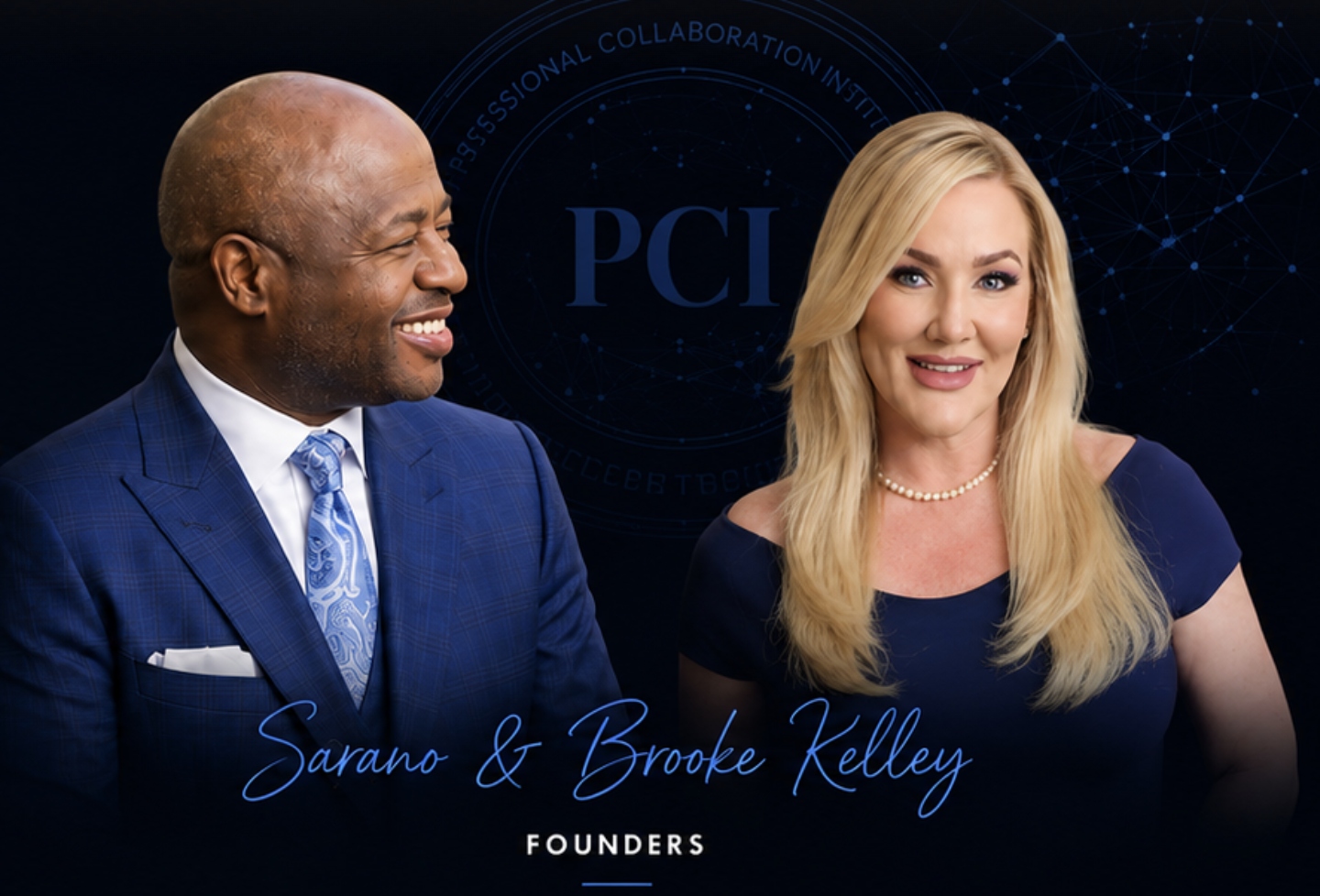
The Professional Collaboration Institute was founded by Sarano and Brooke Kelley, who have spent more than twenty five years training professionals across this ecosystem, hundreds of wholesalers and product specialists, thousands of financial services field leaders, and hundreds of thousands of financial advisors.
Sarano was rated the number one speaker in the financial services industry by the Securities Industry Association at the Wharton School of Business, is a member of the Forbes Coaches Council, and has authored the only book ever published on recruiting financial advisors. His work has been the subject of two television programs and a PBS documentary.
Brooke Kelley is the co-founder and CEO of The Kelley Group as well as a Forbes Council Coach. As a world renowned financial services leader for two decades, she's coached executives listed to Forbes's and Barron's Top 50 as well as Senior Leaders for all the major Wirehouses. Nominated to the 2022 Thought Leadership Luminaries award and Inc's Top 100 Female Founder's as well as having been featured on PBS, MSN, CNN, and Fox. She also rang the NYSE opening bell, co-authored two best selling books, and is regularly published in industry magazines.
The perspective that produced this Institute came from an unusual vantage point: working on the collaboration problem from inside firms attempting internal integration, outside firms building relationships across disciplines, and across professions that rarely convene together. From any single position, the failure looks like a people problem. From all three, the pattern becomes unmistakable, and so does the fact that it isn't.
Professional collaboration has existed informally for generations. What has never existed is the research, education, standards, measurement, and professional structure required to make it a true discipline.
As artificial intelligence transforms the technical work that has traditionally defined professional value, the ability to build trusted relationships and coordinate expertise across disciplines will become an increasingly powerful competitive advantage. The professionals and organizations that develop that capability early won't simply adapt to the change, they will help set the standard for everyone who follows.
Professional collaboration is becoming a discipline. Right now, you have an opportunity to be part of defining it.
Don't wait until the standards have been written, the research has been published, and the field has been established. Help shape what comes next.
The question isn't whether professional collaboration will change the way professionals work together. The question is whether you will help lead that change, or follow it.